How Is Workplace Furniture Design Evolving in China?

Time:2026-11-13 Author:Henry
0%

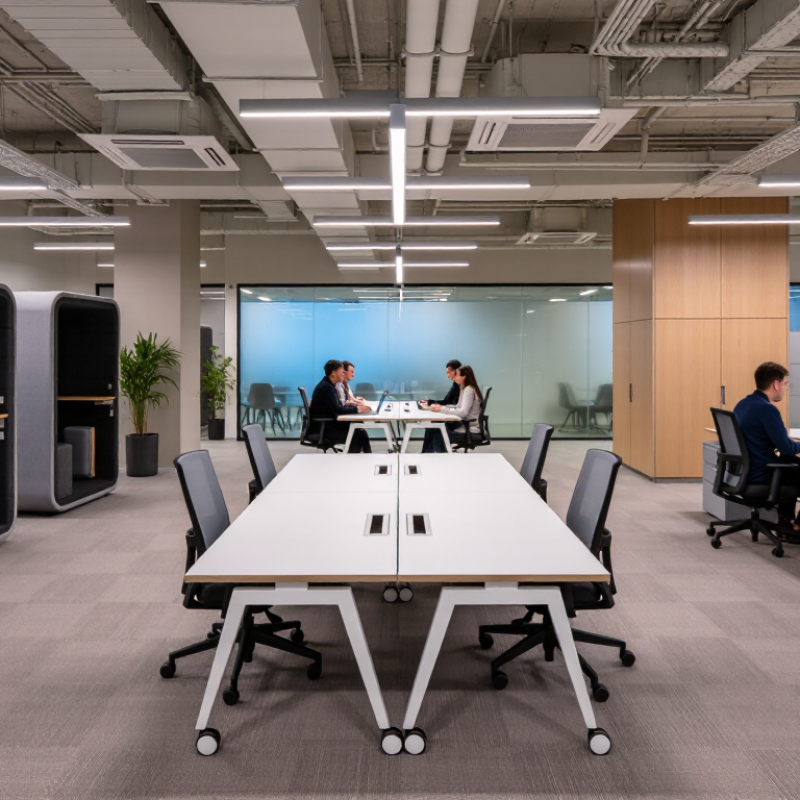
How workplace furniture design is evolving in China is visible in small, practical changes. A fixed desk is giving way to settings for focused work, quick meetings, and informal collaboration. CBRE’s 2024 Asia Pacific Office Occupier Survey and Gensler’s 2024 Global Workplace Survey track changing priorities around workplace experience, flexibility, and employee needs. Their findings point to a useful distinction: furniture is not simply decoration; it helps shape how people use an office. A height-adjustable desk, a quiet booth, or a movable table can support different tasks without rebuilding an entire floor.

The shift is clear. Its success is less certain. As workplace researcher and architect Frank Duffy put it, “The office is a process, not a place.” That idea helps explain why Chinese companies are exploring modular desks, acoustic screens, shared project tables, and better storage for hybrid teams. Picture a meeting room reset in minutes, with wheeled chairs and a table that separates into smaller work surfaces. Yet flexibility can become clutter if furniture lacks durable materials, clear storage, or thoughtful cable management. That is easy to overlook. The next phase will depend on balancing adaptability with comfort, local work habits, and long-term value—not simply buying more fashionable pieces.
How Is Workplace Furniture Design Evolving in China?

Historical Development of Workplace Furniture Design in China

Before modern office furniture became common, much administrative work in China took place at heavy wooden tables, with stools, cabinets, and paper records close at hand. Traditional scholar’s desks offered one point of reference, but workplaces were not simply extensions of the home study. New institutions brought different needs: shared work surfaces, document storage, and furniture that could withstand daily use.

During the twentieth century, office furniture became more standardized. In many institutional settings, sturdy wooden desks, straight-backed chairs, and steel filing cabinets shaped a practical, uniform look. The shift was gradual. After economic reforms expanded commercial offices, imported planning ideas and new materials influenced furniture layouts. Modular desks, wheeled chairs, and meeting tables became more visible, especially in growing cities. Yet older furniture often stayed in service; change rarely arrived all at once.

Today, digital work has reduced the need for some paper storage, while collaboration and hybrid schedules have encouraged flexible layouts. Adjustable desks, cable channels, acoustic screens, and compact storage respond to real constraints in crowded offices. Still, a polished design can overlook comfort, maintenance, or the needs of older workers. This history is not a neat march toward better furniture. Regional budgets, building types, and workplace habits have produced uneven results, and that tension remains visible in the details: a modern chair beside a worn filing cabinet, or a shared table with too few power outlets.

Key Factors Driving Changes in Chinese Office Furniture

How Is Workplace Furniture Design Evolving in China?

Key Factors Driving Changes in Chinese Office Furniture

Chinese offices are shifting from fixed desks toward adaptable spaces for focused work, meetings, and hybrid schedules. This change is practical: a quiet corner, a shared table, and movable storage can serve different teams throughout the day. Yet flexibility is not automatically better. Poorly planned layouts can leave workers without privacy or dependable access to desks.

Sustainability and employee comfort also influence purchasing decisions. The Global Alliance for Buildings and Construction’s 2023 Global Status Report estimates that buildings and construction generate 37% of global energy- and process-related CO₂ emissions. For office furniture, this adds weight to durable materials, repairable components, and designs that can be reused when teams move. Ergonomic adjustments matter too: chairs with clear lumbar support and desks that fit different body sizes are more useful than fashionable shapes alone. The trade-off deserves attention.

Tips: Measure actual work patterns before ordering. Test chair adjustments with different users, check whether desks can be reconfigured, and ask suppliers how damaged parts can be replaced. Start with a small pilot. Some assumptions will be wrong.

Modern Design Principles and Workplace Needs

Workplace furniture in China is adapting to teams that move between focused tasks, video calls, and shared projects. In many urban offices, flexible layouts matter because one room may serve several purposes. Height-adjustable desks, movable tables, and lightweight chairs let teams change the space without major renovation. Small details matter. A cable tray under a desk, a reachable power outlet, or a clear route between chairs can make daily work easier.

Modern design also needs to balance openness with privacy. Acoustic screens can soften nearby conversations, while small meeting booths offer a quieter place for calls. Adjustable chairs and monitor arms help workers set up their stations for different body sizes and working habits. Lockers can reduce clutter when employees do not use the same desk every day. Materials should be durable and easy to maintain, especially in busy shared areas. Yet appearance alone is not enough. A neat open plan can still feel tiring if people lack quiet places to concentrate. Not every solution works. Teams should observe how people actually use a space, then revise the layout; even a well-planned office can miss a need.

How Is Workplace Furniture Design Evolving in China?

Modern workplaces increasingly favor adjustable furniture that can accommodate different people, tasks, and work styles.

These ergonomic reference ranges are a useful starting point for workspace planning, not fixed dimensions for every user. Adjustable desks and monitor positioning help adapt workstations to individual needs.

Source: U.S. Occupational Safety and Health Administration (OSHA), Computer Workstations eTool. Inch measurements converted to centimeters.

Materials, Manufacturing, and Smart Furniture Technologies

How Is Workplace Furniture Design Evolving in China?

Materials and manufacturing are changing together. Offices increasingly need desks and chairs that can be repaired, reconfigured, and moved without replacing whole units. Recycled metal, responsibly sourced wood, and low-emission panels can help reduce waste, but material labels alone do not prove durability. A chipped edge still matters.

China’s manufacturing capacity is also becoming more automated. The International Federation of Robotics reported 276,288 industrial robots installed in China in 2023, equal to 51% of global installations that year. This is a broad manufacturing figure, not a furniture-specific measure, but it signals growing potential for precise cutting and consistent assembly. Smart desks add another layer: motors, sensors, and charging parts make height adjustment convenient, yet they also complicate repair. The Global E-waste Monitor 2024 estimated that 62 million tonnes of electronic waste were generated worldwide in 2022, with only 22.3% documented as formally collected and recycled. That matters. Connected furniture should be designed for replaceable components, not quick disposal. Even good design can miss the mark.

Tips: Check whether a desk’s motor, control panel, and power supply can be replaced separately. Ask for material and emissions documentation, then test the adjustment controls in person. A quiet motor helps; easy servicing matters more.

Current Trends Across China’s Office Environments

Across China, office furniture is moving beyond fixed desk rows. In Shanghai, that can mean shared tables near windows, acoustic booths for calls, and adjustable chairs at assigned workstations. Shenzhen teams may need quick project huddles, while quieter finance departments often protect focus time. One layout rarely serves everyone.

Gensler’s 2024 Global Workplace Survey covered 16,000 workers across 15 countries. Its scale offers a useful benchmark, but it is not a China-only measure. The practical signal is clear: offices need to support both focused work and collaboration. Modular desks, movable screens, and small meeting tables help teams reshape rooms as work changes. Durable, repairable materials also matter in busy spaces. Small details count. Cable access, reachable power, and chair adjustments affect everyday comfort more than dramatic finishes. Yet flexibility can become clutter when furniture moves without clear rules. That tension deserves attention. A thoughtful design gives people choice, while still leaving quiet corners and reliable places to work.

FAQS

What makes modern office layouts in China more flexible?

Height-adjustable desks, movable tables, and lightweight chairs help teams reshape rooms. One space can serve several tasks.

How can offices balance collaboration with privacy?

Acoustic screens soften nearby conversations. Small meeting booths give workers a quieter place for calls. Not every corner needs to be open.

Which small details improve everyday comfort?

A cable tray, reachable power outlet, and clear path between chairs make daily work easier. Small details matter.

Why choose durable, repairable furniture materials?

Recycled metal, responsibly sourced wood, and low-emission panels may reduce waste. Labels alone cannot prove durability. A chipped edge still matters.

What should teams check before choosing a smart desk?

Test the motor, controls, and adjustment range in person. Ask whether the motor, control panel, and power supply can be replaced separately. Easy servicing matters more.

How is automation affecting furniture manufacturing in China?

China installed 276,288 industrial robots in 2023, representing 51% of global installations that year. This is a broad manufacturing figure, not a furniture-specific measure.

Why should smart furniture be designed for repair?

A 2024 global report estimated 62 million tonnes of electronic waste in 2022. Only 22.3% was documented as formally collected and recycled. That matters.

How can shared offices support both focus and teamwork?

Modular desks, movable screens, and small meeting tables let teams adapt rooms. Quiet corners still matter. Flexibility can become clutter without clear rules.

Conclusion

China’s workplace furniture has evolved from formal, fixed arrangements toward flexible environments designed for collaboration, comfort, and changing work patterns. This shift reflects broader economic development, urban growth, new expectations for employee wellbeing, and the adoption of hybrid work. Understanding how workplace furniture design is evolving means looking at how offices balance privacy with teamwork, make better use of limited space, and support different tasks throughout the day.

Modern designs favor adaptability, ergonomic support, and practical, welcoming spaces. Advances in materials and manufacturing have made it easier to create durable, lightweight, and customizable furniture, while smart features can help users adjust their surroundings and manage shared work areas. Across China, offices are combining open collaboration zones with quieter spaces, adaptable desks, and more natural finishes. Together, these developments point to a future in which workplace furniture is not merely functional, but responds to people, technology, and the changing needs of organizations.

Henry

Henry

Henry is a dedicated marketing professional with a profound expertise in the company's offerings. With years of experience in the industry, he possesses an impressive understanding of the market dynamics and consumer behaviors that drive success. Henry is committed to sharing his insights through......