Why Is Sustainable Office Furniture Gaining Popularity?

Time:2026-11-20 Author:Oliver
0%

Why is sustainable office furniture gaining popularity? The answer is visible in everyday workplaces: desks built with recycled materials, chairs designed for repair, and meeting tables kept in use through office renovations. Businesses are paying closer attention to what furniture is made from, how long it lasts, and where it goes when it is replaced. These choices can reduce waste and support broader environmental goals, though the benefits depend on credible product information and actual use.

Sustainable design expert and architect William McDonough has said, “Design is the first signal of human intention.” His point helps explain why furniture choices matter. A repairable chair or a desk made with responsibly sourced materials can signal a longer-term approach to workplace planning. Buyers may also consider indoor material emissions, durability, supplier transparency, and end-of-life options. No single label proves a product is sustainable. Details matter.

The interest is practical, too. Offices change, budgets tighten, and furniture that can be adapted or refurbished may stay useful longer. Yet the picture is not perfect. “Eco-friendly” claims can be vague, and a durable product is not automatically the right choice for every workplace. That tension deserves attention. Understanding why sustainable office furniture is gaining attention means looking beyond the label to materials, maintenance, and measurable performance.
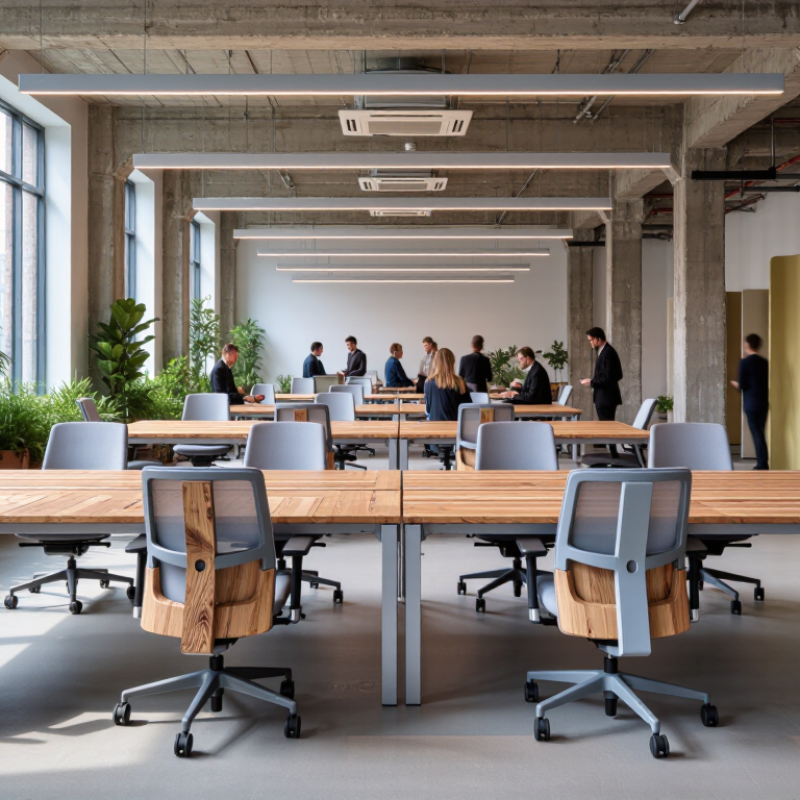
Why Is Sustainable Office Furniture Gaining Popularity?

Defining Sustainable Office Furniture Through Its Full Life Cycle

Defining sustainable office furniture through its full life cycle means looking beyond recycled content or a green label. Materials matter. Wood, steel, foam, and finishes carry impacts from extraction, processing, and transport. Design choices also determine whether a chair can be repaired, disassembled, or recycled. Environmental product declarations, based on life-cycle assessment methods such as ISO 14040, help disclose impacts across defined stages. But an EPD is not an automatic sustainability score; compare products with similar boundaries and assumptions.

The U.S. EPA estimated that 12.1 million tons of furniture and furnishings were generated in the United States in 2018. About 9.7 million tons were landfilled, according to its Advancing Sustainable Materials Management report. Circle Economy’s 2024 Circularity Gap Report estimated that secondary materials made up just 7.2% of materials entering the global economy. These figures make durability and reuse practical concerns, not decorative claims. A sturdy desk with replaceable parts may stay in service longer, though long-distance shipping for reuse can weaken its benefits. There is no perfect choice. I would question any “green” claim that ignores maintenance, packaging, delivery, and what happens when the furniture finally leaves the office.

EPA’s 2018 Data: 12.1 Million Tons of Furniture Waste, About 80% Landfilled

Sustainable office furniture is gaining attention for a practical reason: discarded desks and chairs create a large waste stream. The U.S. Environmental Protection Agency’s 2018 Advancing Sustainable Materials Management report estimated that Americans generated 12.1 million tons of furniture and furnishings. About 80% went to landfills. Picture a scratched desk, a wobbly chair, and an entire office fit-out heading for disposal. The figures make replacement decisions worth examining.

Choosing durable, repairable furniture can help keep usable items in service. Look for replaceable parts, recycled or responsibly sourced materials, and clear product documentation. Ask suppliers how furniture can be repaired, reused, or recycled at the end of its life. Still, “sustainable” labels do not guarantee a lower impact; materials, transport, and product lifespan all matter. A well-built desk that no longer fits the team’s needs can still become waste.

Tips: Measure rooms and user needs before ordering. Keep a simple inventory of furniture that can be repaired or reassigned. Check environmental claims against published specifications, not just sales language. Small steps, yes. But tracking what leaves the office may reveal where purchasing habits need a rethink.

How Recycled Materials and Modular Design Reduce Resource Use

Sustainable office furniture is gaining attention because material choices can reduce demand for newly extracted resources. A desk made with reclaimed timber may preserve usable wood that would otherwise be discarded. Recycled steel and aluminum can also serve in frames, brackets, and cable trays. The details matter. A durable finish and sturdy joints help keep these materials in use for years. Still, recycled content alone does not guarantee a lower-impact product; transport, processing, and product life also count.

Modular design offers another practical way to use less. A replaceable tabletop, detachable leg, or standard-size shelf can be repaired without discarding the whole unit. When a team changes its layout, desks and storage can be rearranged rather than replaced. Small parts matter. A missing connector should not force an entire cabinet out of service. Yet modular systems need clear assembly instructions and parts that remain available. Otherwise, flexibility can become a promise that is hard to maintain. Buyers can check material specifications, repair options, and whether common components can be separated at the end of use. None of these choices is perfect, but together they can make office furniture easier to maintain and less wasteful.

How BIFMA LEVEL and Environmental Product Declarations Verify Performance

Sustainable office furniture is gaining attention, but green claims can be hard to judge from a product photo. BIFMA LEVEL offers a more structured check. It assesses furniture and manufacturing practices across areas such as materials, energy use, human and ecosystem health, and social responsibility. The evaluation uses documented criteria and independent review. That distinction matters. A neat finish or recycled-content claim alone cannot show how responsibly a desk was made.

An Environmental Product Declaration, or EPD, adds a different kind of evidence. It reports environmental impacts calculated through a life-cycle assessment, from material extraction through manufacturing and other defined stages. A purchaser might review the EPD for a task chair’s carbon footprint, water use, or waste indicators. The declaration follows set rules and is typically independently verified. It discloses results; it does not certify that a product is environmentally superior.

Used together, these tools help buyers ask sharper questions. LEVEL indicates whether a product meets a broader set of sustainability criteria, while an EPD makes specific impacts visible. Still, paperwork has limits. EPD comparisons are meaningful only when products share comparable scopes, units, and assessment rules. Neither document proves comfort or long-term durability by itself. It is tempting to treat a label as a verdict, but that is too neat. Check the details, then consider how the furniture will actually be used.

Why Sustainable Office Furniture Is Gaining Popularity: How BIFMA LEVEL and Environmental Product Declarations Verify Performance
Evaluation Dimension BIFMA LEVEL Environmental Product Declaration (EPD) What Buyers Can Learn
Primary purpose Assesses furniture against sustainability criteria in the ANSI/BIFMA e3 Furniture Sustainability Standard. Reports quantified environmental impacts for a product using life-cycle assessment (LCA). LEVEL evaluates a broader set of sustainability practices; an EPD communicates life-cycle environmental results.
Type of evidence Third-party certification based on applicable standard requirements, including prerequisites and point-based criteria. Type III environmental declaration prepared under ISO 14025, using LCA principles from ISO 14040 and ISO 14044. Look for current certification or a published, independently verified declaration—not an unsupported environmental claim.
Environmental scope Includes criteria covering materials, energy and atmosphere, human and ecosystem health, and social responsibility. May report indicators such as global warming potential, acidification, eutrophication, resource use, and waste, as defined by its product category rules. Compare the scope and indicators shown in the documentation; the two tools do not measure identical things.
Life-cycle coverage Reviews product and organizational practices through the standard’s applicable criteria. Uses a defined life-cycle scope. The declaration states which life-cycle stages are included, such as production, transport, use, or end of life. Check the EPD’s declared modules and assumptions before comparing products.
Comparability Certification levels provide a structured indication of performance against the standard’s requirements. Meaningful comparisons require equivalent product functions, declared units, system boundaries, and product category rules. A higher certification level or a lower single EPD indicator does not automatically mean a product is better in every respect.
Useful purchasing checks Confirm the certified product or product family, certification level, and certificate status in the applicable certification records. Review the declared unit, product category rules, life-cycle scope, verification statement, and publication or validity information. Match evidence to the exact product configuration and intended use, including finishes and options where relevant.
Why interest is growing Offers a consistent framework for evaluating sustainability attributes beyond a single material or marketing claim. Provides transparent, standardized environmental information that can support procurement comparisons and reporting. Together, these tools can help buyers ask more informed questions about environmental performance, durability, and responsible sourcing.

Why Repair, Reuse, and Take-Back Programs Extend Furniture Life

Office furniture is built to work hard, but many desks and chairs are replaced when a small part fails. Repair and reuse offer a practical alternative. A loose chair joint, worn caster, or scratched desktop may need only a simple fix. Keeping furniture in service can reduce waste and avoid the effort of buying and installing replacements. It can also preserve useful materials. The process takes planning, though. Repairs may be delayed if parts are difficult to identify or source.

Tips: Check joints, wheels, and drawer runners during routine maintenance. Label reusable parts and record furniture dimensions. Before moving an item, confirm that it fits the next workspace. Small checks help prevent avoidable damage.

Take-back programs can give unwanted furniture a second life through refurbishment, resale, or material recovery. Clear collection schedules and condition guidelines make these programs easier to use. Still, take-back is not automatically waste-free: transport and sorting require resources, and not every item can be repaired. A realistic plan includes staff time, storage space, and a destination for pieces that cannot be reused. That detail is easy to overlook.

FAQS

How much furniture waste did the article report?

The article cites 12.1 million tons of furniture and furnishings generated in the United States in 2018. About 80% went to landfills.

How can an office keep furniture in use longer?

Choose sturdy desks and chairs with replaceable parts. Repair a loose joint or wobbly chair before replacing the whole item.

What should buyers check before ordering furniture?

Measure the room and consider how people will use it. A well-made desk can still become waste if it does not fit the team’s needs.

How can recycled materials help?

Reclaimed timber can give usable wood another purpose. Recycled steel and aluminum may work well in frames, brackets, and cable trays.

What makes modular furniture useful?

Replaceable tabletops, detachable legs, and standard-size shelves can simplify repairs and layout changes. Small parts matter. Check that instructions and replacement components will remain available.

Do recycled materials automatically mean a product has lower environmental impact?

No. Transport, processing, materials, and product lifespan also matter. A recycled-content claim alone tells only part of the story.

What can an Environmental Product Declaration tell buyers?

It reports measured environmental impacts across defined life-cycle stages. Buyers may find information about carbon emissions, water use, or waste.

Do environmental documents prove that furniture is durable or comfortable?

No. They can support closer comparisons, but they do not prove comfort or long-term durability. I can still mistake paperwork for a verdict.

Conclusion

Why sustainable office furniture is gaining attention comes down to its impact across its entire life cycle, from the materials and manufacturing processes used to its eventual reuse or disposal. In 2018, the EPA reported that 12.1 million tons of furniture were discarded in the United States, with about 80% sent to landfills. This scale of waste has encouraged businesses to consider furniture that lasts longer and uses resources more efficiently.

Recycled materials can reduce demand for new resources, while modular designs make it easier to replace or adapt individual components rather than entire pieces. Environmental certifications and product declarations can help buyers assess a product’s performance and impacts. Repair, reuse, and take-back programs also keep furniture in service longer, reduce disposal, and support a more circular approach to furnishing workplaces.

Oliver

Oliver

Oliver is a seasoned marketing professional with a wealth of expertise in driving brand awareness and engagement. With a deep understanding of our company's product offerings, he consistently delivers high-quality content that enriches our professional blog. His insights not only shed light on......