Understanding what companies consider when buying office furniture requires more than comparing prices and finishes. Workplace decisions now connect employee experience, real estate strategy, and measurable business performance. Gensler Research Institute’s 2024 Global Workplace Survey emphasizes that effective offices must support focused work, collaboration, learning, and social connection. That finding changes the buying question. A desk is not only a desk. Its size, adjustability, cable management, and location can influence how people concentrate and communicate.
CBRE’s 2024 global workplace research also highlights a continuing “flight to quality.” Companies are investing in offices that encourage attendance and justify expensive real estate. Furniture becomes part of that investment. Comfortable task chairs, acoustic screens, height-adjustable desks, and flexible meeting tables create visible signals of care. Yet a polished showroom can hide practical weaknesses. Poor warranty terms, difficult replacement parts, and limited accessibility may create costs later. Buyers should test furniture with real employees, including shorter users, taller users, and people with mobility needs.
Dr. Craig Knight, an organizational psychologist who studies workplace environments, has said, “The more control people have over their environment, the happier and more productive they are.” His point supports a central principle behind what companies consider when buying office furniture: employees need choice, not decoration alone. They may need quiet corners, movable tables, personal storage, or different seating during one afternoon. The evidence is useful, but not perfect. Survey responses cannot predict every workplace. Budgets, culture, and building constraints still matter. Good purchasing therefore combines credible research with direct observation, employee feedback, and a willingness to reconsider assumptions.
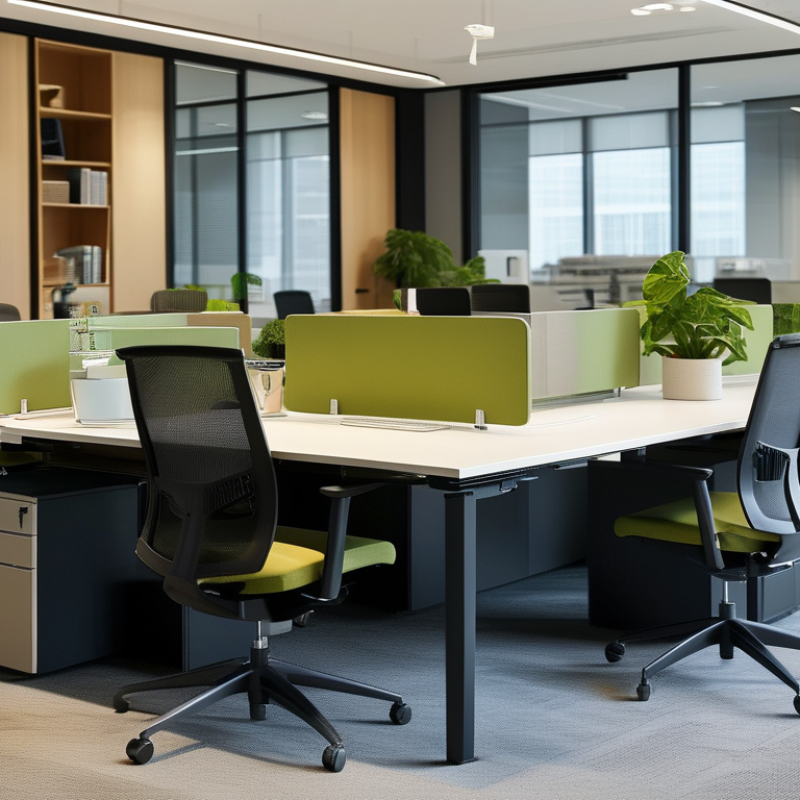
Business furniture purchasing is not simply a search for attractive desks. It involves space planning, employee comfort, durability, delivery, maintenance, and future changes. The U.S. Bureau of Labor Statistics reported that 22.4% of employed people worked at home on days worked in 2024. That figure shows why companies now assess shared desks, storage, meeting areas, and flexible seating more carefully.
Cost matters, but the cheapest option can create hidden expenses. A weak chair may increase replacements. An oversized workstation can reduce usable floor space. Ergonomic design also deserves professional attention. The National Institute for Occupational Safety and Health links poorly designed workstations with awkward postures and musculoskeletal strain. Buyers should compare product dimensions, adjustment ranges, warranty terms, material performance, and repair options. Needs differ. I would also test furniture with real employees, not only review supplier photographs. That step is often skipped.
Tips: Measure doorways, elevators, and floor plans before ordering. Request finish samples under office lighting. Record user feedback after two weeks, then revise the purchasing list. The International Facility Management Association’s workplace research continues to emphasize flexibility and space utilization. Still, every office has different workflows. A polished plan can fail when it ignores noise, personal storage, or cleaning routines. Buy for daily behavior, not appearance alone.
Companies do not buy furniture merely to fill empty rooms. They buy support for concentration, movement, privacy, and collaboration. In practice, a beautiful chair can fail after three hours of poor lumbar support. A fixed desk may frustrate employees using laptops, documents, and video calls. Gallup’s State of the Global Workplace 2024 report found only 23% of employees were engaged worldwide. Furniture cannot solve engagement alone. Yet uncomfortable settings can quietly add friction to demanding workdays.
Function must match real employee behavior. Adjustable desks, stable casters, reachable power, and clear circulation all matter. Ask where employees lose time. Watch how monitors, notebooks, and coffee compete for space.
Comfort is measurable. A Harvard-led study published in Environmental Health Perspectives found that workers in green-certified buildings scored 26.4% higher on cognitive tests. They also reported 30% fewer sick-building symptoms. This does not prove that one chair improves performance. That assumption is risky. Lighting, ventilation, noise, and management habits also shape the experience. Gallup reported that 51% of employees were watching for or actively seeking a new job. Purchasing teams should therefore test furniture with real users, not only review showroom photographs. Some employees may prefer fixed stations, while others need easy movement. A perfect layout probably does not exist. More careful observation usually produces a better one.
When companies buy furniture, budget often opens the discussion, but it should not close it. In my experience reviewing office fit-outs, the cheapest chair can become expensive after repeated repairs, replacements, and lost comfort. Price matters. Not always. Procurement teams should compare the full cost of ownership, including delivery, assembly, maintenance, and expected service life. A lower purchase price may suit a temporary workspace, while a higher initial cost may be sensible for a busy reception area.
Quality is more than polished surfaces and attractive photographs. It appears in stable joints, smooth drawer movement, reliable hardware, and materials that tolerate daily use. Staff notice small failures quickly. A loose armrest or uneven desk can affect comfort and confidence. Buyers should request specifications, test samples when possible, and check whether measurements fit the room. We once underestimated clearance around a cabinet, creating an awkward walkway. That mistake looked minor on paper. It was not.
Durability shapes both planning and workplace safety. Furniture exposed to heavy traffic needs stronger construction than occasional-use pieces. Buyers can ask about weight limits, cleaning requirements, replacement parts, and warranty conditions. Documentation matters because confident claims are not enough. A supplier’s clear answers are useful evidence. Still, durability is not absolute; poor installation and harsh cleaning can shorten any product’s life. Budget pressure can also distort judgment. A modest, repairable table may outperform a fashionable option that cannot be maintained. The best decision depends on use, not appearance alone.
When companies buy furniture, they are not choosing chairs in isolation. Design communicates priorities before a visitor reads a policy. A reception desk with calm lines can suggest confidence, while harsh lighting may signal unnecessary pressure. In workplace projects, I have found that proportion, texture, and movement affect how people use a room. A wide shared table invites exchange. Small acoustic zones protect concentration. These details make design practical, not decorative.
Branding becomes stronger when furniture supports the organization’s actual character. Colors, materials, and forms should reflect its work, audience, and level of formality. A creative studio may need flexible pieces and visible collaboration. A technical office may value order, durability, and focused workstations. Consistency matters, but imitation does not. Employees notice when a polished environment conflicts with daily behavior. That mismatch weakens trust.
Workplace culture should guide the purchase, not follow it. Before approving a layout, decision-makers can observe meetings, breaks, and quiet work. Ask who feels excluded. Ask who controls shared spaces. I once underestimated the value of personal storage, assuming digital work reduced clutter. It did not. Bags and coats gathered beside desks, making the room feel unfinished. That mistake showed me that good furniture decisions require evidence, listening, and willingness to revise. Budgets also matter. Durable materials may cost more initially, yet frequent replacement can create higher disruption and waste.
| Buying Consideration | What Organizations Evaluate | Observable or Measurable Indicators | Connection to Workplace Culture and Brand | Common Evidence Requested During Procurement |
|---|---|---|---|---|
| Ergonomics and Employee Well-Being | Whether desks, chairs, and monitor arrangements support neutral postures, adjustability, movement, and prolonged computer-based work. | Seat-height range, back-support adjustment, armrest adjustment, work-surface height, and user trial feedback. | Demonstrates that the organization treats employee comfort, health, and productivity as practical priorities rather than visual concerns alone. | Ergonomic assessment, product specifications, user testing, and alignment with applicable ergonomic guidance such as ISO 9241-5. |
| Safety and Accessibility | Potential hazards related to stability, sharp edges, moving parts, electrical components, circulation, and access for people with disabilities. | Tip-over resistance, load ratings, cable management, accessible clearances, maneuverability, and safety certifications where applicable. | Reflects a culture of inclusion, duty of care, and responsible workplace management. | Safety test reports, accessibility reviews, installation drawings, maintenance instructions, and applicable building or accessibility requirements. |
| Durability and Lifecycle Value | How well furniture is expected to withstand daily use, relocation, cleaning, impact, and changing occupancy patterns. | Material specifications, abrasion or load-test results, repairability, replaceable components, warranty terms, and expected service life. | Supports a culture of long-term planning and responsible spending instead of short-term visual upgrades. | Independent test documentation, warranty conditions, maintenance schedules, spare-parts availability, and lifecycle-cost calculations. |
| Flexibility and Adaptability | Whether furniture can support individual work, collaboration, meetings, hybrid work, training, and future space reconfiguration. | Modularity, mobility, reconfiguration time, nesting or stacking capability, power access, and compatibility with multiple layouts. | Communicates an adaptive culture that values collaboration, choice, and the ability to respond to organizational change. | Typical floor plans, mock-up demonstrations, reconfiguration scenarios, installation requirements, and space-utilization reviews. |
| Acoustic Performance | How furniture and space-dividing elements help manage speech distraction, reverberation, privacy, and concentration. | Panel height, sound-absorption characteristics, enclosure level, material composition, and measured acoustic performance where available. | Shows whether the workplace balances openness and teamwork with the need for focus and confidential conversation. | Acoustic test data, room mock-ups, sound-level observations, and design guidance based on workplace acoustics principles. |
| Design Language and Visual Consistency | Whether form, color, texture, proportion, and material choices create a coherent environment across workstations, meeting areas, reception, and shared spaces. | Finish consistency, color-control process, sample approvals, visual quality, and compatibility with interior design standards. | Furniture becomes a tangible expression of organizational identity without relying on logos or excessive branded decoration. | Finish samples, material boards, rendered layouts, design guidelines, and full-scale physical mock-ups. |
| Workplace Culture Fit | Whether the furniture supports the organization’s preferred behaviors, such as individual focus, teamwork, mentoring, social connection, or privacy. | Balance of individual and shared settings, seating variety, privacy options, collaboration surfaces, and employee preference data. | Aligns the physical environment with how people are expected and encouraged to work. | Employee surveys, workplace observations, pilot installations, stakeholder workshops, and post-occupancy evaluations. |
| Sustainability and Material Transparency | Environmental effects associated with materials, manufacturing, transportation, use, repair, and end-of-life disposal. | Recycled content, responsibly sourced materials, product emissions information, durability, repair options, and recyclability. | Signals environmental responsibility and makes sustainability values visible in everyday workplace choices. | Environmental Product Declarations, material health disclosures, chain-of-custody documentation, and relevant green-building criteria. |
| Indoor Air Quality | Whether furniture materials and finishes may contribute to indoor emissions after installation. | Low-emitting material documentation, adhesives and coatings information, ventilation considerations, and product emissions testing. | Connects purchasing decisions with employee health, comfort, and the quality of the indoor environment. | Emissions test reports, safety data sheets, material declarations, and applicable indoor-air-quality assessment criteria. |
| Technology Integration | How naturally furniture accommodates power, data, displays, video meetings, charging, and cable control. | Power and data access, cable routing, device compatibility, serviceability, upgrade paths, and support for hybrid meetings. | Reinforces a culture of digital collaboration and reduces visual disorder caused by unmanaged technology. | Technology layouts, electrical plans, compatibility checks, demonstration units, and maintenance procedures. |
| Procurement, Installation, and Maintenance | Whether the supplier can meet delivery, installation, cleaning, repair, replacement, and change-management requirements. | Lead times, installation sequence, replacement-part availability, cleaning instructions, service response, and total cost of ownership. | Reveals how the organization balances design ambition with operational reliability and accountability. | Implementation plan, service-level terms, maintenance manuals, total-cost model, and references from comparable projects without disclosing brand data. |
Commercial furniture decisions often begin with appearance, but operations usually decide whether a purchase succeeds. A delivery window must match building access, elevator bookings, and staff availability. A late truck can disrupt a whole workday. I have seen a simple loading delay create extra handling costs and frustrated employees.
Installation deserves equal attention. Clear assembly instructions help, yet complex workstations may require trained installers and floor protection. Ask who checks alignment, secures fittings, and removes packaging. Small errors become noticeable when desks wobble or storage doors stop closing. The process is not always smooth. Some suppliers promise speed, while actual site conditions slow everything down. That gap should be discussed before approval, not after payment.
Long-term support influences total value more than a polished showroom image. Businesses should ask about replacement parts, repair response times, warranty procedures, and care guidance. A missing hinge can make an entire cabinet unusable. Reliable support should be documented in practical terms. Response within two business days sounds useful, but the remedy matters more. Will someone send a part, schedule a technician, or offer only general advice? Companies can compare these details beside price, materials, and delivery terms. The best choice may still involve compromises. Recognizing them early makes the buying decision more honest and easier to manage.
Compare total ownership cost, not only the purchase price. Include delivery, assembly, maintenance, repairs, and expected service life. A cheaper chair may become expensive quickly.
It may suit busy areas, such as reception spaces or shared meeting rooms. Frequent use can justify stronger construction and longer service life. Still, higher cost does not guarantee better value.
Look for stable joints, smooth drawers, reliable hardware, and suitable materials. Request specifications and test samples when possible. Small faults matter. A loose armrest can reduce comfort every day.
Furniture must fit real movement patterns, not only floor plans. Check cabinet clearance, walkway width, door swings, and chair movement. We once missed cabinet clearance. The walkway became awkward.
Ask about weight limits, cleaning requirements, replacement parts, and warranty conditions. Clear documentation provides useful evidence. Durability is not absolute.
A wide shared table can encourage conversation and teamwork. Small acoustic areas can protect concentration. Design should support actual work, not merely look attractive.
Observe meetings, breaks, quiet work, and shared-space habits before approving a layout. Flexible furniture may support collaborative teams. Orderly workstations may suit focused environments.
Personal storage is easy to underestimate. Bags and coats may gather beside desks, making the room feel unfinished. Digital work does not remove physical clutter. I learned that late.
Yes, especially when repairs and replacement parts are readily available. A modest table may outlast an attractive item that cannot be maintained. Use matters more than appearance.
Compare samples, measurements, maintenance needs, and expected use. Listen to employees who will use the space daily. Revise the plan when evidence disagrees.
Understanding what companies consider when buying office furniture helps explain why business purchases involve more than choosing attractive desks and chairs. Organizations typically assess how furniture supports daily tasks, employee comfort, collaboration, privacy, and productivity. They also compare budgets with expected quality and durability, seeking solutions that can withstand frequent use while offering reasonable long-term value. Ergonomics, flexibility, storage, and ease of maintenance may also influence the final decision.
Design plays an important role because furniture can reflect workplace culture, create a consistent professional atmosphere, and support the organization’s visual identity without sacrificing practicality. Companies must also evaluate delivery schedules, installation requirements, space planning, warranties, replacement options, and ongoing service. By considering function, employee needs, cost, appearance, logistics, and future support together, businesses can make informed furniture decisions that meet operational goals and create a comfortable, effective workplace.

Sitnova Furniture