Planning office furniture upgrades for 2026 requires more than choosing attractive desks and chairs. It demands a clear view of workplace needs, employee behavior, budgets, and long-term business goals. The question is not simply how companies plan office furniture upgrades, but how carefully they connect furniture decisions with daily performance. A cramped meeting room, unstable monitor arm, or poorly adjusted chair can quietly reduce comfort and productivity.
Experienced facility managers often begin with a room-by-room assessment. They measure desk sizes, walking paths, storage capacity, lighting conditions, and power access. Employee feedback also matters. A short survey can reveal recurring problems, such as limited privacy or insufficient collaboration space. Useful evidence should guide the plan, not personal preference. Procurement teams should compare materials, warranties, maintenance requirements, delivery schedules, and total lifecycle costs. A low purchase price may become expensive after repeated repairs.
The strongest upgrade plans include a small pilot area before a full rollout. Employees can test adjustable desks, acoustic panels, task chairs, and shared tables for several weeks. Their feedback may challenge the original design. That is valuable. Office planning is rarely perfect on the first attempt. Some companies may also underestimate installation disruption or future headcount changes. A practical 2026 strategy leaves room for adjustment, measures results after installation, and documents every decision. This approach supports healthier workspaces, more responsible spending, and furniture choices that remain useful as workplace needs evolve.
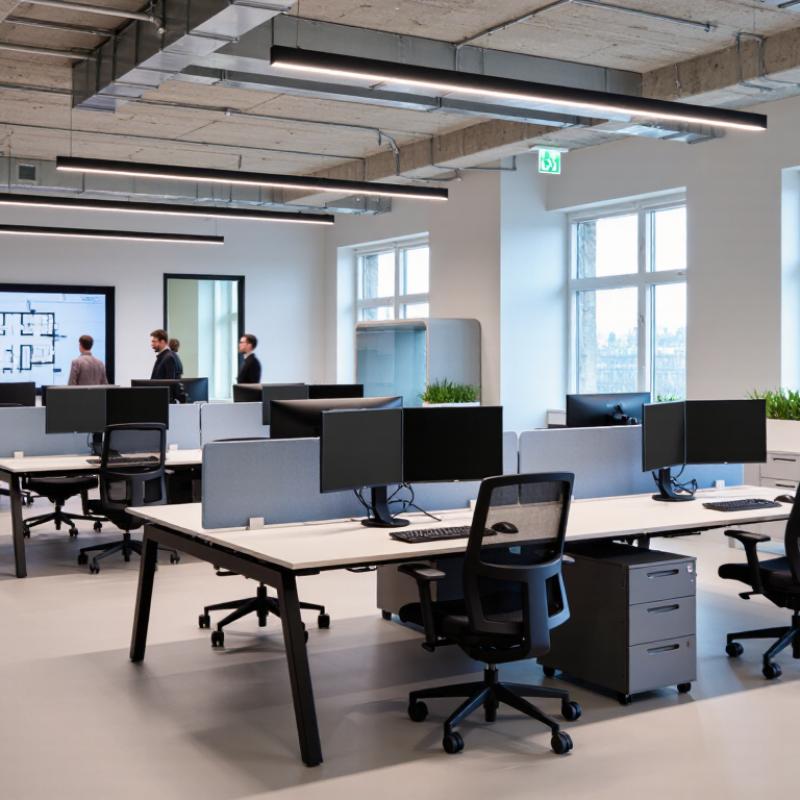
Before choosing desks or chairs, define what the 2026 upgrade must improve. A clear scope prevents attractive but irrelevant purchases. Interview employees, facilities staff, and team leaders. Observe a typical Tuesday, including empty desks, crowded meeting rooms, and improvised laptop stations.
Use evidence, not assumptions. Gallup’s State of the Global Workplace 2024 report found that only 23% of employees were engaged worldwide. Furniture will not solve weak management, but poor comfort can worsen daily frustration. The Leesman Index research also shows that workplace experience depends on both functional support and user perception. Set measurable goals, such as reducing chair-related complaints by 30%, increasing usable collaboration seats, or supporting 15% more shared workstations. Write the baseline first.
Scope the project room by room. Mark which items need replacement, repair, relocation, or no action. A height-adjustable desk may suit a shared workstation, while a quiet room needs compact storage and controlled lighting. Consider accessibility, cleaning routines, cable management, delivery routes, and future reconfiguration. Small details matter.
Leave space for doubt. Employee surveys can overrepresent the loudest voices. Pilot one floor for four weeks, then compare feedback with actual usage data. The 2024 Global Workplace Survey from the Gensler Research Institute reported that workers value choice in where and how they work. That finding supports flexible planning, but flexibility without clear rules can create disorder. Define success, limits, budget ownership, and review dates before approving the furniture list.
| Goal | Planning baseline | 2026 target | Upgrade scope | Out of scope | Suggested measure | Priority |
|---|---|---|---|---|---|---|
| Improve ergonomic support | A portion of task chairs lack adjustable lumbar support and seat-depth controls. | Provide adjustable chairs for at least 90% of regularly assigned workstations. | Task chairs, monitor arms, footrests where needed, and ergonomic assessments for priority users. | Medical diagnosis or treatment; personal accessories not required for workstation fit. | Share of assigned workstations meeting the approved ergonomic checklist. | High |
| Support hybrid work | Attendance varies by day, while some desks and collaboration areas are used inconsistently. | Match assigned desks and shared settings to measured peak-day demand, with a 10–15% capacity buffer. | Reconfigurable desks, shared touchdown stations, and appropriately sized meeting and focus settings. | Changes to remote-work policy or building lease arrangements. | Peak-day seat utilization and employee feedback on finding suitable work settings. | High |
| Improve space flexibility | Some furniture layouts are difficult to adapt for team changes or different work activities. | Use modular components in priority areas and reduce furniture-related layout changes to a planned, manageable process. | Modular tables, mobile storage, movable screens, and standard connection or power requirements. | Structural construction, major electrical work, and changes to life-safety systems. | Time and cost required to reconfigure a representative team area. | Medium |
| Reduce avoidable replacement | Furniture condition and repair history are not consistently recorded across departments. | Assess all items in the project area and repair or redeploy suitable furniture before purchasing replacements. | Condition audit, repair triage, inventory tagging, and a documented reuse or recycling route. | Organization-wide asset management system replacement. | Percentage of audited items repaired, reused, recycled, or replaced with a recorded reason. | High |
| Improve collaboration and focus | Open work areas may not provide enough choice between group collaboration and quiet individual work. | Provide a balanced mix of team tables, enclosed meeting spaces, and quiet or focus settings based on usage observations. | Furniture for collaboration zones, focus areas, and small meetings; include accessibility and circulation checks. | Acoustic building upgrades or audiovisual system replacement unless separately approved. | Post-occupancy survey results by work activity and setting type. | Medium |
| Control total project cost | Furniture, delivery, assembly, removal, and contingency costs may be tracked separately. | Approve a total-cost budget before ordering and retain a 10% contingency for verified changes. | Furniture, freight, installation, temporary storage, disposal, and approved contingency. | Unapproved scope additions and unrelated office operating costs. | Forecast-to-actual variance across the full project cost, reported monthly. | High |
| Minimize disruption during installation | Furniture deliveries and installation can affect access, noise levels, and daily work. | Complete work in sequenced zones with communicated access plans and agreed installation windows. | Delivery scheduling, floor protection, installation, removal, and a final safety and quality check. | Changes to staffing arrangements beyond temporary project coordination. | Installation milestones completed on schedule and reported disruption incidents. | High |
Planning note: Baselines and targets above are illustrative project-planning assumptions. Validate them through a furniture inventory, employee input, space-use observations, accessibility review, and approved budget before procurement.
Set clear goals, such as fewer chair complaints or more usable collaboration seats. Record current conditions before making changes.
Observe a typical workday and ask employees, facilities staff, and team leaders. Notice crowded rooms, unused desks, and improvised laptop setups.
Different spaces support different tasks. A shared workstation may need an adjustable desk, while a quiet room may need compact storage and controlled lighting.
Let staff try key chairs and desks when possible. Ask whether controls are easy to reach and whether the furniture suits varied body sizes.
Measure walkways and desk heights. Map power outlets, device connections, cable access, and space for screens or assistive equipment.
Ask about materials, maintenance needs, repair options, and expected service life. A recycled surface may still require more care than staff can provide.
Record workstation use, comfort ratings, maintenance requests, and complaints before installation. Repeat the same checks after 30, 90, and 180 days.
Inspect the furniture’s fit and adjustability with facilities staff. Small changes, like moving a monitor arm or adding a footrest, may help.
Some workers may tolerate a poor setup without reporting it. Numbers miss details. Brief conversations can reveal friction that surveys overlook.
Planning an office furniture upgrade for 2026 begins with clear goals and a defined scope. Companies should determine whether they want to improve employee comfort, support hybrid work, modernize outdated areas, increase space efficiency, or strengthen sustainability. A careful review of existing furniture, workspace requirements, employee feedback, and available budget can reveal priorities and prevent unnecessary spending. This assessment also helps organizations decide which items should be repaired, replaced, or reorganized.
The next step is to select furniture that balances function, ergonomics, technology integration, durability, and environmental responsibility. A phased upgrade plan should then establish timelines, responsibilities, purchasing stages, installation requirements, and communication procedures. Understanding how companies plan office furniture upgrades also means evaluating results after implementation. By tracking employee satisfaction, workspace usage, productivity indicators, maintenance needs, and budget performance, organizations can identify what works and adjust their furniture strategy over time. This flexible approach supports practical improvements while keeping future office needs in focus.

 Sitnova Furniture