How Will Flexible Offices Change Furniture Design in 2026?

Time:2026-11-27 Author:Madeline
0%

In 2026, flexible offices will ask furniture to do more than fill a floor plan. Teams may shift between focused work, quick meetings, and shared projects within a single day. That changing rhythm makes how flexible offices change furniture design a practical question for designers and workplace leaders. A desk that rolls easily, a table with accessible power, or a chair that adjusts without tools can support those transitions. Small details matter.

The strongest designs are likely to balance mobility with comfort and durability. Modular desks, lightweight seating, and movable acoustic screens can help teams reshape a room without a major renovation. Yet flexibility should not mean making every surface temporary. Employees still need supportive chairs, stable worktops, and places to store personal items. A caster that rattles across the floor is not innovation. It is an annoyance.

Good planning begins with observing how people actually use a space, then testing furniture choices with real users. Facilities teams can track which settings stay busy and which are ignored. That evidence is more useful than a polished showroom impression, though it may reveal inconvenient truths. Not every open, adaptable layout works for every task. Quiet calls, accessibility needs, and individual preferences deserve attention too. Furniture will not solve every workplace problem. But thoughtful choices can make shared offices easier to navigate, more comfortable to use, and less wasteful to reconfigure.
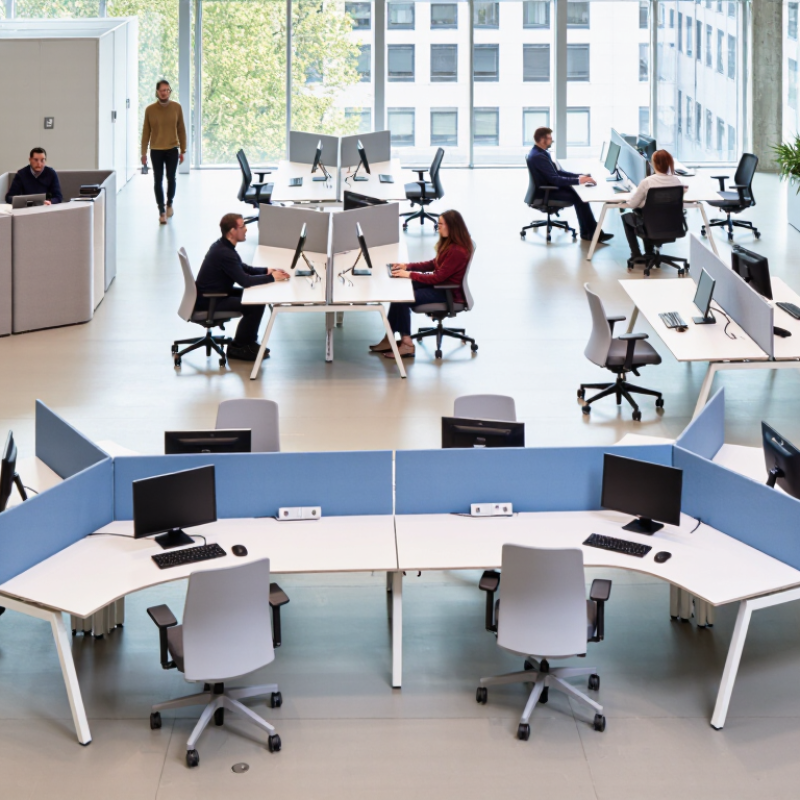
How Will Flexible Offices Change Furniture Design in 2026?

Flexible Offices and the Shift Toward Adaptable Furniture

Flexible Offices and the Shift Toward Adaptable Furniture

Flexible offices need furniture that can change with the work, not just look modern. Gensler’s 2024 Global Workplace Survey drew on more than 16,000 workers across 15 countries, reflecting how varied workplace needs have become. A fixed row of desks may suit focused tasks, but it can feel awkward during a quick team review. Tables on lockable wheels, nesting chairs, and lightweight screens let staff reshape a room without waiting for a facilities crew.

Adaptability also means supporting different postures and levels of privacy. A high table can become a short meeting point; a movable acoustic panel can soften noise beside a shared desk. The International WELL Building Institute’s 2024 report on workplace well-being highlights the importance of environments that support comfort and choice. That choice should be practical: adjustable chairs, reachable power, and clear routes matter more than a dramatic furniture feature. Small details count.

Yet flexibility has limits. Too many movable pieces can create clutter, and furniture that is easy to shift may be unstable or uncomfortable. That sounds neat. It rarely is. In 2026, designers should test layouts with actual users, then observe what gets moved, ignored, or repeatedly adjusted. Adaptable furniture works best when it responds to real routines, not a speculative floor plan.

How Will Flexible Offices Change Furniture Design in 2026?

U.S. employees who did some or all of their work at home on days worked

What this suggests: As work patterns become more flexible, furniture that can be rearranged for individual focus, collaboration, and changing team sizes can help offices adapt.

Source: U.S. Bureau of Labor Statistics, American Time Use Survey. Figures are rounded.

Work Patterns Driving Furniture Design Changes in 2026

Flexible offices in 2026 are responding to work that shifts by hour, task, and team. An employee may start with video calls, move to focused writing, then join a project huddle. Furniture must keep pace. Height-adjustable desks support changing postures, while small tables on lockable casters let teams reshape a room quickly. That mobility matters most when attendance varies across the week.

Designers are treating acoustic comfort as a work-pattern issue, not a decorative extra. Soft screens, booths, and high-backed seating can reduce nearby conversation noise without isolating people completely. Power access is becoming more visible, too. Workers need outlets near shared tables, lounge seats, and temporary touchdown points.

Small details count. A bag hook, a reachable socket, or a stable laptop surface can prevent awkward improvisation.

Hybrid schedules make storage less predictable. Personal lockers and mobile pedestals help clear desks between users, though too many units can make an open floor feel cramped. Modular pieces should be easy to move, but not so light that they wobble during a call. There is a trade-off. Some offices may overestimate how often teams rearrange furniture. Real booking and occupancy patterns offer a better starting point than assuming every room needs to transform daily.

Modular, Mobile, and Multi-Use Furniture Features

Flexible offices will make furniture work harder in 2026. CBRE’s 2024 Global Workplace & Occupancy Insights reported peak office utilization at about 53%, up from 38% in 2022. That uneven demand favors pieces that move quickly: desk-height tables on locking casters, lightweight screens, and stackable chairs. Teams can turn a quiet corner into a project area without waiting for a facilities crew. A small detail matters: casters should roll smoothly but lock firmly on carpet.

Modular furniture should connect and separate without tools. A table with hinged leaves can host four people at noon, then open up for training. Mobile whiteboards can divide a room, though they often become cluttered storage if no one owns them. Multi-use pieces also need practical storage: benches with compartments can hold cables, headsets, and spare keyboards. Gensler’s 2024 Global Workplace Survey gathered responses from more than 16,000 workers across 15 countries, a reminder that one layout rarely suits every role or culture. Furniture plans should therefore offer choices, not just visual variety. Provide adjustable desks for focused work, shared tables for short meetings, and a few genuinely quiet seats. Flexible is not automatically comfortable. Test layouts with actual users, then revise the awkward bits—like a screen that blocks a walkway or a table that is too heavy to move.

Technology, Materials, and Sustainability in Office Furniture

How Will Flexible Offices Change Furniture Design in 2026?

Flexible offices will ask furniture to work harder across different tasks. A desk may support focused work in the morning, then become a shared project table after lunch. Expect more lightweight tables, stackable chairs, and modular storage that teams can move without tools. Built-in power and cable channels will help reduce clutter, while occupancy sensors may guide staff toward available rooms. But technology should stay useful, not become another screen to manage. A sensor cannot make an awkward chair comfortable.

Materials will matter as much as features. Recycled metals, responsibly sourced wood, and replaceable fabric covers can extend a product’s useful life. Durable surfaces also matter: a tabletop that resists scratches may need fewer repairs. Still, recycled content alone does not guarantee a lower overall impact. Buyers should ask about repair options, material composition, and expected service life. This takes more effort. It is worth asking.

Tips: Test chairs and tables in real work settings before ordering. Check that power outlets are easy to reach, parts can be replaced, and materials suit frequent cleaning. Leave room for workers to adjust layouts; a flexible office should not feel like a furniture puzzle.

Effects on Space Planning, Employee Experience, and Procurement

Flexible offices will push furniture design away from fixed desk rows and toward pieces that support several work modes. A project table may host a team at 10 a.m., then clear for quiet focus after lunch. Lightweight desks, nesting chairs, and mobile screens make that shift practical. Space planning will need clear routes, power access, and storage that does not block movement. Flexibility is not simply adding wheels. If every item moves, the room can feel unsettled, and staff may waste time resetting it.

Employee experience depends on small, repeatable details. A chair that adjusts quickly, a screen that reduces visual noise, and a nearby place for bags can make shared work feel less temporary. Quiet zones still matter. So do settings that suit different bodies and working styles. Yet open layouts can amplify calls and movement; no furniture plan solves that alone. Teams should test layouts during busy hours, not only in an empty room. Some assumptions will be wrong.

Procurement will increasingly favor durable, repairable furniture with replaceable parts and clear performance information. Buyers can compare lifecycle costs, cleaning needs, lead times, and ease of reconfiguration. A pilot area may reveal whether mobile storage is useful or just another obstacle. This takes time. Standardizing compatible dimensions can simplify future changes, though too much uniformity may make the office feel generic. Purchase decisions should follow observed use, not trend language.

FAQS

Why do flexible offices need adaptable furniture?

Work can shift from solo writing to a quick team review. Tables on lockable wheels and nesting chairs make room changes easier. Small details count.

Which furniture helps workers change posture?

Height-adjustable desks and adjustable chairs support different working positions. A high table can also become a short meeting spot. Not every worker will use it.

How can furniture reduce noise without isolating people?

Movable acoustic screens can soften nearby conversation noise. High-backed seating and booths offer more separation for calls or focused work. The room may still feel noisy.

What should offices consider for hybrid schedules?

Personal lockers and mobile pedestals help clear desks between users. Keep enough space for walking; too many storage units can make an open floor feel cramped.

How important are power outlets in flexible offices?

Outlets should be reachable from shared tables, lounge seats, and temporary work spots. A socket hidden behind a sofa is not much help.

Can technology make flexible furniture work better?

Occupancy sensors may help people find available rooms, while cable channels can reduce desk clutter. Technology should solve a real problem, not add another screen to manage.

Which materials are worth considering?

Recycled metals, responsibly sourced wood, and replaceable fabric covers may support longer use. Ask about repairs and service life, too. Recycled content alone proves little.

How should teams test furniture before buying it?

Try chairs and tables during real work, including calls and team huddles. Check whether outlets are easy to reach and parts can be replaced. That is the catch: a neat showroom layout may not suit daily routines.

Conclusion

Flexible offices are reshaping how organizations think about workspaces, and how flexible offices change furniture design is becoming a key question for 2026. As employees move between focused tasks, collaboration, and remote work, furniture needs to support different activities without locking a space into one fixed arrangement. Modular desks, movable partitions, lightweight seating, and multi-use tables can be rearranged quickly, helping offices adapt to changing team sizes and daily needs.

Design choices will also reflect advances in workplace technology, demand for durable and lower-impact materials, and the need to create comfortable, inclusive environments. Integrated power access, ergonomic features, and easy-to-maintain surfaces can improve everyday use, while flexible layouts may give employees more choice in how they work. For planners and procurement teams, this shift means evaluating furniture not only by its initial cost, but also by its adaptability, lifespan, and ability to make better use of space.

Madeline

Madeline

Madeline is a dedicated marketing professional with a wealth of expertise in our company's core offerings. With a keen understanding of the industry, she brings a unique perspective to her role, consistently delivering high-quality content that highlights the superior aspects of our products. As......