China’s office furniture market is responding to changing work habits, tighter floor plans, and growing expectations for employee comfort. In 2026, buyers are looking beyond desks and chairs to complete, adaptable workplace solutions. So, what are the latest office furniture trends? The answer includes ergonomic seating, height-adjustable desks, modular layouts, integrated technology, and quieter spaces for focused work.
This guide explores ten trends shaping office furniture in China, from recycled materials and biophilic details to compact designs for hybrid teams. Picture a meeting table with built-in power, a movable divider that creates a private call area, or a chair adjusted to support a full workday. Small details matter. They can affect comfort, maintenance, and how easily a space changes over time.
Not every popular feature suits every office. Smart furniture may add convenience, but it can also bring extra setup and maintenance. Sustainable materials deserve scrutiny, too; buyers should ask for clear product specifications rather than rely on broad claims. A trend is useful only when it fits the team, budget, and working environment. Some forecasts may miss the mark. Office needs vary by industry, city, and company size, so these ideas are best treated as practical options—not universal rules.
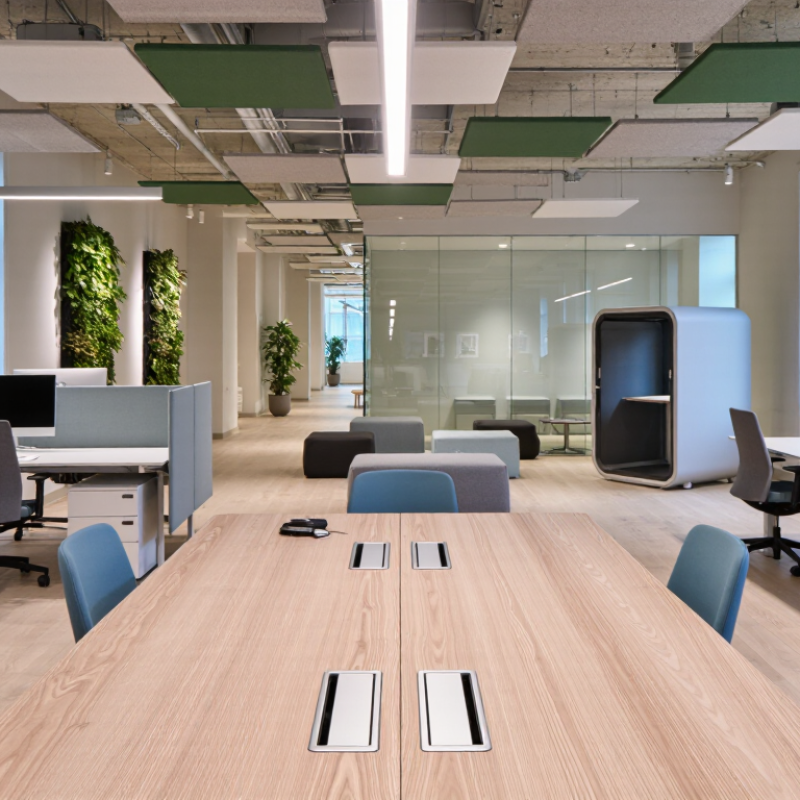
China’s office furniture market in 2026 is shaped by hybrid work, tighter budgets, and changing expectations for workplace comfort. Many companies are redesigning offices around smaller teams, shared desks, and flexible meeting areas. Demand is shifting from rows of identical workstations toward adaptable furniture that can serve more than one purpose.
Small details matter. A desk with accessible cable storage can reduce clutter, while adjustable seating helps staff who spend long hours at screens. Acoustic panels and movable partitions can make open offices more usable without permanent construction. Buyers also pay closer attention to durable materials and repair options, since low upfront prices may lead to higher replacement costs.
Manufacturers face pressure to balance customization with reliable delivery. China’s established production networks can support varied designs, but material prices and shipping conditions may still affect lead times. Sustainability is gaining attention, though claims should be checked against clear information about materials, coatings, and product lifespan. There is no single ideal layout: a design that works in a technology office may not suit a factory administration team. And flexibility can become an excuse for overcrowding if space planning is poor. In 2026, the strongest purchasing decisions will connect furniture choices to real work patterns, not just showroom appeal.
In 2026, office furniture in China is likely to focus more on everyday comfort than dramatic design. Ergonomic chairs should offer adjustable lumbar support, seat depth, and armrests, since employees differ in height and working habits. A chair that fits one person may press against another’s thighs. Small adjustments matter. Sit-stand desks can add movement to long workdays, but changing positions should feel easy, not like another task. Stable frames and quiet motors are practical details in shared offices.
Employee well-being also depends on the space around the desk. Adjustable task lights can reduce screen glare, while modest acoustic panels may soften the noise of calls and keyboard use. Clear walkways and reachable storage help reduce awkward stretching and clutter. These choices are most useful when staff can test them and report discomfort. A furniture plan can look excellent on paper and still miss how people actually work. And furniture alone cannot prevent fatigue. Regular breaks, sensible workloads, and managers who listen remain essential. The best office setup is not perfect; it is one that can be adjusted when real needs become clear.
A qualitative outlook based on workplace design priorities and practical product features; trends are not ranked by market-share data.
| No. | Trend | Typical Furniture Features | Employee Well-Being Focus | Practical Evaluation Indicator |
|---|---|---|---|---|
| 1 | Adjustable ergonomic workstations | Desks with adjustable height and work surfaces that can be set to suit different users and tasks. | Supports varied working postures and helps users position screens and input devices more comfortably. | Check adjustment range, stability, controls, and whether users can set up the workstation comfortably. |
| 2 | Sit-stand desks and movement-friendly layouts | Height-adjustable desks, paired with clear space for changing posture and moving around the workstation. | Makes it easier to alternate between sitting and standing; the desk does not replace regular movement or ergonomic setup. | Assess adjustment ease, noise, cable slack, load capacity, and user access to movement breaks. |
| 3 | Supportive, adjustable task seating | Chairs with adjustable seat height and depth, back support, and controls suited to the intended users. | Helps users find a supported sitting position and adapt the chair to different body sizes and work tasks. | Trial chairs with a range of users; review adjustability, durability, cleanability, and repair options. |
| 4 | Acoustic furniture for focused work | High-backed seating, upholstered screens, and enclosed or semi-enclosed booths within open-plan offices. | Offers quieter settings for concentration, confidential conversations, or online meetings. | Evaluate speech privacy, ventilation, lighting, accessibility, and how easily users can reserve or access spaces. |
| 5 | Modular furniture for flexible teams | Reconfigurable tables, movable storage, and screens that can support individual, team, and project work. | Allows teams to adapt spaces to changing tasks without relying on a single fixed layout. | Check connection systems, reconfiguration time, storage needs, and safe movement of components. |
| 6 | Inclusive and accessible workstation choices | Work surfaces with usable knee clearance, accessible controls, varied seating options, and clear circulation routes. | Helps accommodate different body sizes, mobility needs, and ways of working. | Review applicable accessibility requirements and test layouts with the people who will use them. |
| 7 | Integrated cable management and power access | Desks and meeting tables with cable trays, accessible power points, and routing designed to reduce loose cables. | Keeps work areas more orderly and reduces trip hazards and interruptions when connecting devices. | Inspect cable capacity, access for maintenance, electrical compliance, and compatibility with users’ devices. |
| 8 | Biophilic details and natural finishes | Furniture using natural-looking finishes, plant-compatible shelving, and forms that complement daylight and greenery. | Can contribute to a more welcoming workplace when combined with good lighting, ventilation, and thoughtful space planning. | Check material emissions documentation, cleaning needs, durability, and coordination with indoor plants and lighting. |
| 9 | Durable, repairable, and circular furniture | Replaceable components, repairable finishes, material transparency, and designs intended for long service life. | Reliable furniture and straightforward repairs can reduce disruption and support responsible purchasing. | Request care instructions, spare-part availability, warranty terms, and credible material or environmental documentation. |
| 10 | Technology-ready collaboration furniture | Meeting tables and shared-work surfaces with accessible power, cable routing, and layouts that support in-person and remote participation. | Reduces setup friction and helps teams collaborate across meeting formats. | Test sightlines, screen placement, power access, acoustics, and compatibility with the office’s meeting equipment. |
In 2026, smart office furniture is shifting from novelty toward practical support for everyday work. Height-adjustable desks with quiet motors can help teams alternate between sitting and standing without interrupting calls. Desks with built-in charging keep phones powered, while cable trays prevent cords from tangling underfoot.
Small details matter. Sensors may track desk use or remind employees to move, but they should offer clear controls and useful feedback. More data does not automatically mean a better workspace.
Tips: Test each feature during a normal workday. Check that controls are easy to reach, cables stay tidy, and settings can be adjusted. Keep it simple.
Technology should fit the room, not dominate it. For example, a shared meeting table might include discreet power access and a simple connection panel, reducing the scramble for adapters. Before choosing connected furniture, confirm which devices it supports and how it receives software updates.
Ask staff to try the controls, too; a feature that looks intuitive in a showroom may feel awkward after hours of use. One weak point is maintenance: more electronics can mean more parts to troubleshoot. Consider repair access and replacement components alongside appearance and comfort.
For 2026 office projects, circularity should begin at the design table, not the loading dock. UNEP’s 2024 Global Resources Outlook reports that global resource extraction has tripled in five decades and could rise another 60% by 2060. Choose recycled steel, reclaimed timber, and recycled-content acoustic panels where performance and sourcing can be verified. Ask suppliers for material disclosures, repair instructions, and parts that can be replaced without discarding an entire desk. Small details matter: screw-fastened panels are easier to separate than glued layers, and standard-size components simplify future repairs. That matters.
The waste figures make the case tangible. The U.S. EPA’s Advancing Sustainable Materials Management report estimates that furniture and furnishings generated 12.1 million tons of municipal solid waste in the United States in 2018; about 80.1% was landfilled. Modular layouts, durable finishes, and take-back options can help keep furniture in use longer, but a “recycled” label alone proves little. Check recycled content, durability, and end-of-life routes together. Be honest about trade-offs: recycled materials may vary in color, and disassembly takes planning. Not automatically. A circular office is built through maintenance schedules, spare-part storage, and procurement rules that reward repair—not just replacement.
China’s office furniture choices in 2026 are shaped by changing team sizes and hybrid schedules. Flexible workspaces can support focused tasks, quick meetings, and quiet calls without assigning every seat a single purpose. A rolling desk, movable screen, and nearby power outlet can make a small area work harder. Small shifts matter.
Modular systems make those changes easier. Teams can combine shared tables, storage units, acoustic panels, and individual desks, then rearrange them as needs evolve. Choose components with stable connections and accessible cable management. Measure doorways, aisle widths, and power locations before ordering. Measure twice. A layout that looks open on paper may feel cramped once chairs are pulled out.
Customization is most useful when it solves a specific problem, such as limited floor space or varied working heights. Specify practical details: desk dimensions, edge finishes, storage depth, and durable surface materials. Ask for drawings or a sample finish before approving a large order. Not every team needs a bespoke solution; standard modules may be easier to replace. There is a trade-off: too many custom options can complicate maintenance, and that part is easy to overlook.
Flexible Workspaces, Modular Systems, and Customization
Flexible layouts, modular furniture, and ergonomic adjustability lead this qualitative 2026 outlook. Scores are editorial planning-priority ratings on a 1–10 scale, not measured market shares or survey results.
Hybrid schedules, tighter budgets, and changing comfort needs are influencing office layouts. Many companies are replacing fixed rows with shared desks and flexible meeting areas.
Look for adjustable lumbar support, seat depth, and armrests. A chair that suits one employee may press against another’s thighs. Fit varies.
They can add movement to long workdays. Choose a stable frame and quiet motor, especially in shared offices. Position changes should feel easy.
Try a rolling desk, movable screen, and nearby power outlet. These details can help one area support focused work or quick meetings. Measure the space first.
Measure doorways, aisle widths, and power locations. Check that components connect securely and include accessible cable management. Measure twice.
Customization can solve specific problems, such as limited floor space or varied working heights. Confirm desk dimensions, storage depth, and surface materials. Ask for a drawing or finish sample.
Acoustic panels may soften calls and keyboard sounds. Reachable storage and cable spaces can reduce clutter. Clear walkways matter, too.
Check material, coating, repair, and product lifespan details rather than relying on broad claims. A low purchase price may mean earlier replacement. That deserves a second look.
No. Furniture alone cannot prevent fatigue. Breaks, sensible workloads, and responsive managers still matter. We may overvalue flexibility when the real problem is poor space planning.
China’s office furniture market in 2026 is being shaped by changing work habits, employee expectations, and growing attention to environmental impact. When asking “what are the latest office furniture trends,” businesses will find a focus on ergonomic designs that support comfort and well-being, including adjustable seating and work surfaces suited to different users and tasks. Smart furniture is also becoming more common, with practical technology features that help workplaces operate more smoothly without distracting from daily work.
Sustainability and adaptability are equally important. Furniture made with durable, responsibly selected materials and designed for repair, reuse, or recycling can help reduce waste over time. Meanwhile, modular systems, flexible layouts, and customization allow offices to accommodate collaborative projects, focused work, and changing team sizes. Together, these developments point toward workplaces that are more comfortable, connected, resource-conscious, and responsive to the needs of employees and organizations.

Sitnova Furniture