Workplace fatigue is a pressing issue that affects productivity and employee well-being. Studies show that up to 83% of employees report feeling fatigued at work. This fatigue often stems from inadequate seating arrangements. Proper seating is crucial for maintaining comfort and focus throughout the day. Therefore, understanding how to reduce workplace fatigue through better seating is essential.
According to the Occupational Safety and Health Administration (OSHA), ergonomic chairs can minimize discomfort and enhance employee performance. When employees are comfortable, they are less likely to experience fatigue. A 2022 survey found that companies using ergonomic solutions saw a 16% increase in productivity. However, not all organizations prioritize seating; many still overlook this critical factor.
Ineffective seating choices can lead to chronic pain and decreased job satisfaction. As a result, employees may struggle to concentrate or stay engaged. Acknowledging these challenges and making targeted improvements can create a more positive work environment. Employers need to reflect on their seating options and consider investing in better solutions to combat fatigue.
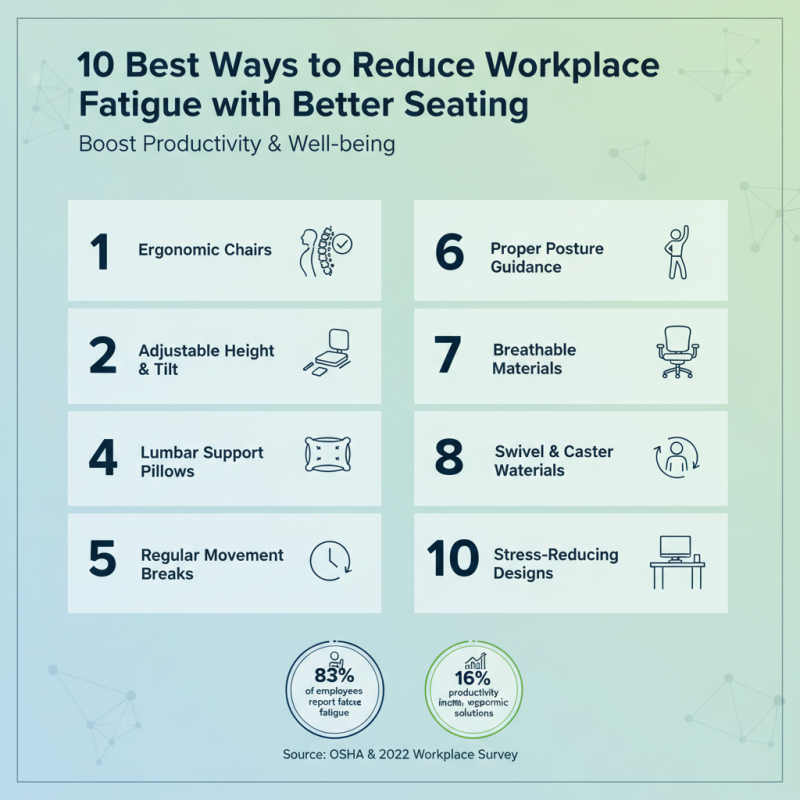
Workplace fatigue is a significant issue that many employees face. It often stems from prolonged periods of sitting, poor posture, and inadequate seating arrangements. Understanding the root causes is essential for creating a healthier work environment. Fatigue can lead to decreased productivity, errors, and even health complications. Employees may find themselves struggling to concentrate or lacking motivation. This can be disheartening and counterproductive.
Poor seating can exacerbate fatigue. When chairs lack proper support or are not adjustable, it affects posture and circulation. Employees may end up shifting in their seats frequently, leading to discomfort. Even minor adjustments can have a substantial impact. Simple changes such as using a chair with lumbar support or adjusting seat height can alleviate stress. Managers and employees should evaluate their current seating arrangements and consider ergonomic options. This approach not only enhances comfort but also promotes a more engaged workforce. It’s vital to reflect on existing setups and acknowledge the areas needing improvement, rather than maintaining the status quo.
Creating a comfortable workspace is essential for productivity. Ergonomics plays a crucial role in office seating solutions. Properly designed chairs support the body, reducing strain. They encourage better posture, which can lead to significant improvements in focus. Employees who are comfortable are more engaged.
Many workplaces overlook the importance of ergonomics. A poorly designed chair can lead to fatigue and discomfort. Workers often shift in their seats, trying to find relief. This constant movement is distracting and unproductive. An ergonomic chair, however, can minimize these issues. It can be adjustable and provide lumbar support that fits different body shapes.
Consider the environment as well. Additional elements like desk height and monitor position matter too. Workers should be able to align their screens at eye level. This reduces neck strain and enhances comfort ratios. Yet, many companies still fail to prioritize these adjustments, leading to unnecessary fatigue. Investing in ergonomic solutions is not just about comfort. It's about fostering a healthier and more productive workplace.
Choosing the right seating can significantly reduce workplace fatigue. Various types of seating are designed to enhance comfort and promote well-being. Ergonomic chairs are one of the most popular choices. They support the natural shape of your spine, which helps maintain good posture. An adjustable height feature allows users to find their ideal seating position. This personalization can lead to longer periods of focus without fatigue.
Standing desks offer another alternative. They encourage movement throughout the day, which may reduce the monotony of sitting. Employees often feel more energized when they can alternate between sitting and standing. Incorporating cushions or footrests can also enhance comfort. These additions support lower back alignment and help prevent strain.
Not every solution will work for everyone. Personal preference plays a significant role in comfort levels. Some might prefer a firm chair, while others opt for plush seating. It's essential to periodically assess your seating choices. Consider what feels right and make adjustments as needed. This mindful approach can lead to improved workplace satisfaction.
Choosing the right chair is crucial for workplace productivity. A study by the Occupational Safety and Health Administration (OSHA) found that proper seating can reduce workplace fatigue by up to 40%. Yet, many employees spend long hours in inadequate chairs. This can lead to discomfort, decreased focus, and lower overall productivity.
When selecting a chair, consider ergonomics. Adjustable features are essential. A chair should support the natural curve of the spine. This is vital for maintaining good posture. According to the American Chiropractic Association, poor posture can lead to back pain and chronic fatigue, affecting work performance.
Material and design also play a role. Chairs with breathable fabrics can enhance comfort. Comfort leads to longer periods of productivity. However, some workers prefer a firmer seat. It's important to test different options. Your ideal chair may not be the most expensive one. Finding the right fit requires personal reflection and assessment. The balance between comfort and support often reveals what is truly necessary for a conducive work environment.
Workplace fatigue often stems from prolonged hours of sitting. Improving seating arrangements can help, but incorporating movement and regular breaks is equally vital. Movement stimulates blood flow and enhances mental clarity.
Consider incorporating short stretches every hour. These can refresh your body and mind, combating fatigue. Standing while taking phone calls can also be effective. It shifts your posture and energizes your workflow.
Scheduled breaks are just as important as movement. Taking five minutes to step outside can rejuvenate your spirit. Limit screen time during these breaks to reduce eye strain. Listen to your body; sometimes you may feel tired despite having a comfortable chair. Reflect on your daily habits. Adjusting your seating alone won’t solve everything. Balancing movement and rest is key to sustained energy levels at work.
| Seating Type | Benefits | Recommended Movement | Suggested Breaks |
|---|---|---|---|
| Ergonomic Chair | Improves posture and reduces back pain | Gentle stretches every hour | 5-minute break every hour |
| Standing Desk | Promotes active work stance | Shift weight from one leg to the other | 10-minute walk every hour |
| Sit-Stand Desk | Flexible working positions | Alternate sitting and standing every 30 minutes | 5-minute series of light exercises |
| Active Sitting Stool | Encourages core engagement | Balance movements every 10 minutes | Stretching every 15 minutes |
| Ball Chair | Enhances balance and stability | Roll forward and back | Standing break every 20 minutes |
| Reclining Chair | Reduces pressure on the spine | Lean back for comfort | Short relaxation breaks |
| Kneeling Chair | Aligns back and reduces fatigue | Shift weight between knees | Quick walks every 30 minutes |
| Saddle Chair | Promotes healthy posture | Twist and shift every 10 minutes | Stand up every 20 minutes |
| Desk Exercise Equipment | Encourages light exercise while seated | Use hand weights or resistance bands | Active break every 15 minutes |
: Workplace fatigue stems from prolonged sitting, poor posture, and inadequate seating arrangements.
Poor seating leads to discomfort and affects posture, which can exacerbate fatigue and decrease motivation.
Using a chair with lumbar support and adjusting seat height can significantly alleviate discomfort.
Ergonomic chairs support the spine's natural shape, helping maintain good posture and reducing fatigue.
Standing desks promote movement and energy, allowing employees to alternate between sitting and standing.
Employees should consider ergonomics, test options, and reflect on their comfort preferences.
Breathable fabrics can enhance comfort, while the firmness level can vary according to personal preference.
No, personal preference is crucial; some may prefer firm chairs, while others might choose softer options.
It's essential to periodically assess your seating to ensure it meets your comfort and productivity needs.
Poor posture can result in back pain and chronic fatigue, which negatively impacts work performance.
In today's fast-paced work environment, understanding how to reduce workplace fatigue through better seating is essential for maintaining productivity and employee well-being. Workplace fatigue often arises from prolonged sitting and poor ergonomics, leading to discomfort and decreased focus. By prioritizing ergonomics in office seating solutions, employers can mitigate these effects, ensuring that seating arrangements promote comfort and support healthy posture.
Choosing the right chair is crucial for enhancing workplace productivity. It is important to consider features that encourage good alignment and support spinal health. Additionally, incorporating regular movement and breaks into the workday can significantly enhance the benefits of ergonomic seating, helping employees recharge and stay engaged. By implementing these strategies, organizations can create a more comfortable and efficient work environment, ultimately reducing fatigue and improving overall morale.
Sitnova Furniture